Terminal Rails: Understanding Their Role in Electrical Installation and Control Systems
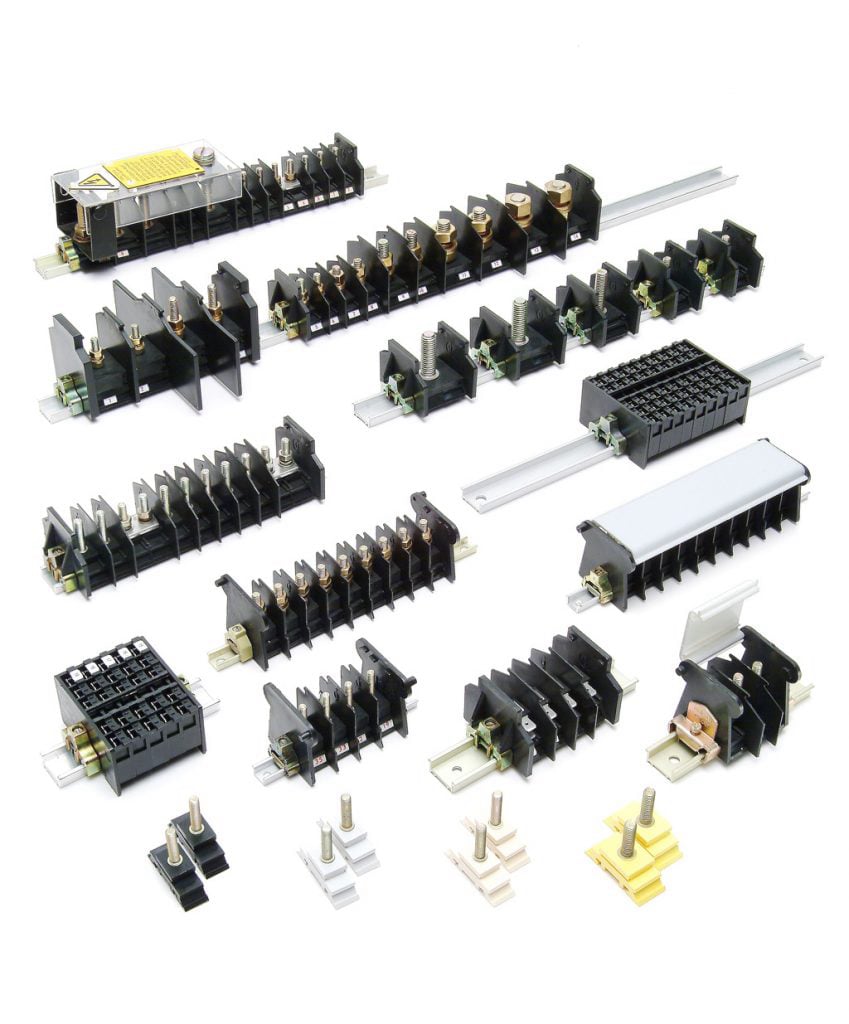
Electrical installations often contain hundreds or even thousands of individual connections. Keeping these connections secure, organised and accessible is essential for maintaining reliable electrical systems, particularly in industrial, transportation and infrastructure environments. Components used to organise electrical terminals may appear relatively simple, but they play an important role in creating installations that can be assembled, inspected and maintained efficiently.
Terminal Rails provide a structured mounting system for terminal blocks and other compatible electrical components within control panels, distribution equipment and electrical enclosures. By providing a standardised mechanical mounting point, they allow groups of electrical connections to be arranged logically rather than having individual terminals independently attached throughout an enclosure.
What Is a Terminal Rail?
A terminal rail is a metal mounting rail designed to support terminal blocks and related electrical equipment. The rail itself does not normally provide the primary electrical connection between conductors. Instead, terminal blocks are mounted onto it, creating an organised row of connection points.
One of the most familiar examples is the DIN rail, which is widely used within electrical control cabinets and industrial equipment. Different rail profiles and dimensions are available depending on the components and installation requirements.
The principle is straightforward: compatible components clip or secure onto the rail, allowing an installer to build an organised electrical assembly.
Creating Organised Electrical Connections
Organisation is particularly important when an electrical system contains large numbers of wires.
Without a structured mounting arrangement, tracing individual circuits can become difficult. Terminal blocks mounted sequentially along a rail allow connections to be labelled and grouped according to their function.
For example, separate sections might be used for power distribution, control circuits, sensors, communications or safety systems.
This structured approach can make both installation and subsequent maintenance considerably easier.
Applications in Control Panels
Industrial control panels are one of the most common environments where terminal mounting systems are used.
A control cabinet may contain circuit breakers, relays, power supplies, programmable controllers and numerous other components. External equipment also needs to connect into these systems.
Terminal blocks provide convenient interface points between field wiring and internal panel wiring.
Arranging these terminals along dedicated rails helps engineers create clear separation between different electrical functions.
Use in Transportation Systems
Transportation applications can involve particularly complex electrical systems.
Rail vehicles, for example, may contain circuits supporting lighting, passenger information, doors, communications, auxiliary power and numerous control functions. LPA Group's product portfolio demonstrates the breadth of electrical and electronic systems used in modern rolling-stock environments, including connectors, auxiliary power equipment and other rail electrical components.
Reliable cable management and connection organisation therefore become important considerations when designing these installations.
Similar principles apply across aerospace, marine and specialist vehicle applications, although the specific components and standards involved can vary considerably.
Why Standardisation Matters
Standardised mounting systems allow compatible components from established electrical product ranges to be installed using predictable dimensions.
This provides several practical benefits.
Engineers can design enclosure layouts knowing approximately how much rail space different components require. Installers can also replace compatible components without completely redesigning the mounting arrangement.
Standardisation can therefore contribute to easier system design, assembly and long-term maintenance.
Terminal Blocks and Rail Compatibility
Not every terminal block fits every mounting rail.
Electrical designers need to ensure that the rail profile matches the terminal components being specified. Terminal width is another consideration because it determines how many connection points can fit within the available enclosure space.
End stops may also be installed to prevent groups of terminals moving along the rail.
Additional accessories can include separators, markers, jumper bars and protective covers.
Together, these components create a complete terminal management system rather than simply a row of individual electrical connectors.
Materials and Environmental Conditions
Terminal mounting equipment may operate in very different environments.
A control cabinet inside a clean building presents different challenges from electrical equipment installed on a railway vehicle, industrial machine or outdoor infrastructure system.
Temperature, humidity, vibration, corrosion and contamination can all influence material selection.
Metal rails may therefore use materials or protective finishes appropriate to the intended environment.
In applications involving significant vibration or mechanical shock, the security of mounted components becomes especially important.
Installation Space
Electrical enclosures have finite internal space, making efficient component positioning essential.
Terminal rails allow designers to use available panel area systematically. Multiple rails can be positioned within an enclosure, with cable ducts or wiring routes installed alongside them.
Careful planning also helps maintain appropriate separation between circuits where required.
Designers need to consider not only whether components physically fit but also whether technicians will have sufficient access for wiring, inspection and replacement.
Identification and Labelling
Clear identification is an important feature of professionally designed electrical installations.
Individual terminals can usually be numbered or labelled so they correspond with wiring diagrams and electrical documentation.
A technician investigating a fault can then locate the relevant connection without tracing an entire conductor manually.
This becomes increasingly valuable as electrical systems become more complex.
Accurate documentation and physical identification should therefore work together.
Maintenance and Fault Finding
One of the major benefits of organised terminal systems becomes apparent during maintenance.
If an electrical fault develops, engineers may need to test voltage, continuity or signals at specific points within the circuit.
Accessible terminal connections provide convenient locations for testing.
A clearly arranged rail also allows technicians to isolate sections of wiring and identify individual circuits more quickly.
In systems expected to remain operational for many years, maintainability should be considered during the original design rather than after problems occur.
Mechanical Security
Electrical reliability depends on mechanical integrity as well as circuit design.
Loose connections can cause intermittent faults, overheating or complete circuit failure. Terminal components therefore need to remain securely mounted while conductors are properly terminated according to the manufacturer's requirements.
Rail mounting provides a stable mechanical foundation, but the complete installation still depends on correct component selection and assembly.
Regular inspection may be required in applications exposed to demanding operating conditions.
Designing for Future Changes
Electrical systems are frequently modified during their service life.
Additional sensors may be installed, control systems upgraded or new equipment connected. Leaving suitable spare rail capacity during the original design can make these changes easier to accommodate.
Without spare space, even a relatively minor modification may require significant rearrangement of existing components.
Designing with reasonable expansion capacity can therefore reduce the cost and complexity of future upgrades.
Supporting Modular Electrical Design
Rail-mounted components contribute to modular electrical design.
Instead of constructing every electrical connection arrangement from scratch, designers can combine standard components to create systems suited to specific applications.
Terminal blocks, relays, protection devices and interface modules can often be positioned systematically within the same enclosure.
This modularity helps simplify manufacturing while making electrical layouts easier for technicians to understand.
Choosing the Appropriate System
Selecting terminal mounting equipment should always begin with the requirements of the complete electrical installation.
Engineers should consider the terminal type, conductor sizes, available enclosure space, operating environment, vibration levels and any relevant electrical or transportation standards.
Ease of installation and future maintenance should also influence the design.
The objective is not simply to fit as many terminals as possible into an enclosure. A good installation should remain understandable, accessible and serviceable throughout its operational life.
Ultimately, Terminal Rails provide the mechanical foundation for creating structured and accessible electrical termination systems. Their ability to support organised groups of terminal blocks makes them valuable across control panels, industrial machinery, transportation equipment and infrastructure installations. When correctly specified, they contribute to clearer wiring layouts, easier maintenance, efficient use of enclosure space and reliable long-term electrical system management.