Bahco Tools: Why Quality Hand Tools Matter for Professional and DIY Work
The quality of the tools you use can have a direct impact on the accuracy, safety and efficiency of almost any practical task. Whether you're working in construction, automotive repair, engineering, plumbing, electrical installation or simply carrying out maintenance around the home, reliable tools help jobs get done faster and with greater confidence. Poorly made equipment can slip, wear quickly or fail under pressure, while well-designed tools tend to offer better grip, control and long-term value.
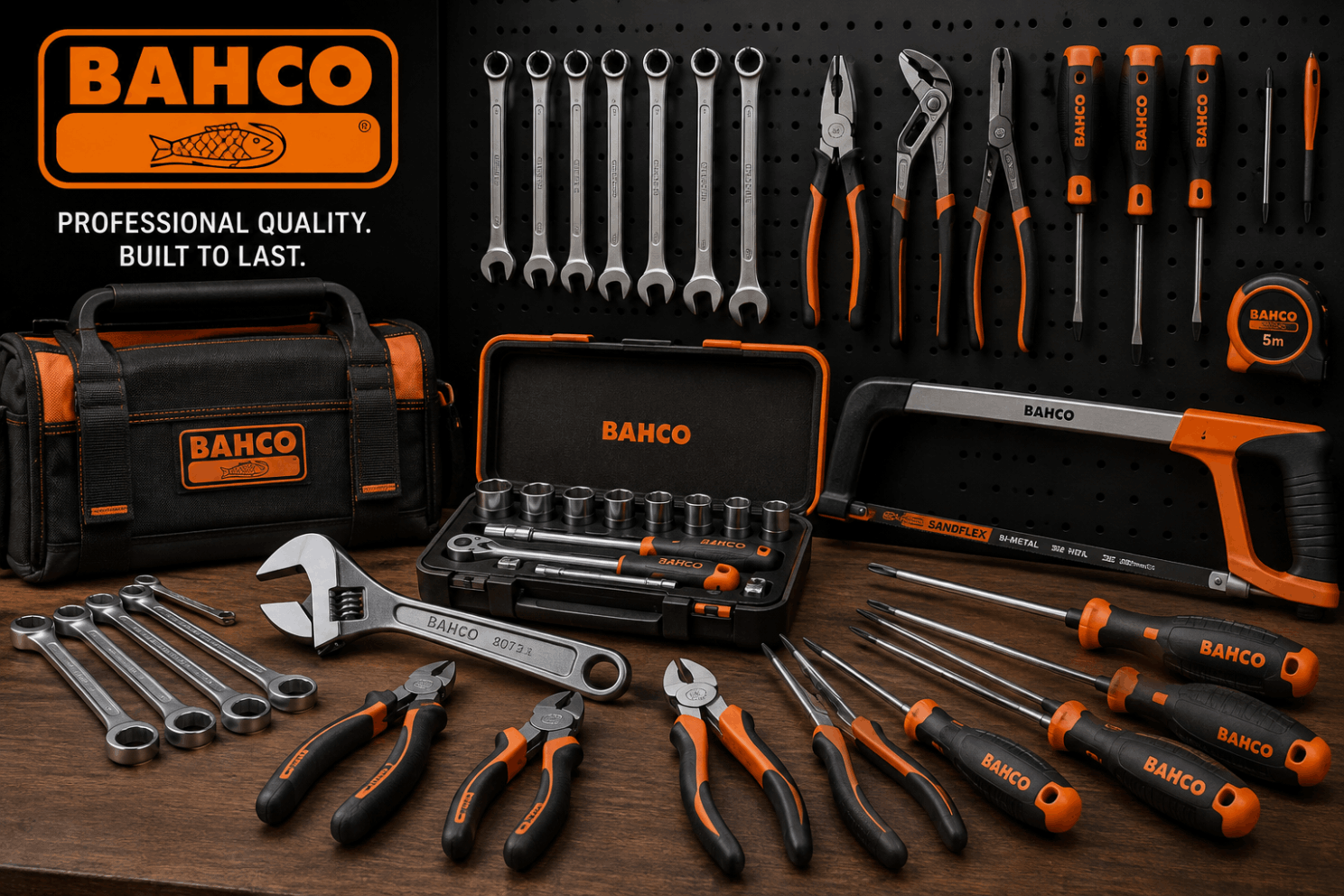
For tradespeople and home users researching Bahco Tools, the brand is associated with a broad range of professional hand tools designed for regular use across many industries. From adjustable wrenches and pliers to screwdrivers, sockets, saws and storage solutions, the range covers many of the essential tools commonly found in workshops, vans and professional toolkits.
One of the most important considerations when buying tools is selecting equipment suited to the task. Using the wrong tool can damage components and create unnecessary safety risks. A correctly sized spanner, for example, provides better contact with a nut or bolt than an improvised alternative, reducing the chance of slipping or rounding the fastener.
Adjustable wrenches are among the most versatile tools available. Their movable jaws allow one wrench to work with multiple fastener sizes, making them particularly useful for plumbing, mechanical maintenance and general repair work. A precisely engineered adjustment mechanism helps maintain good contact while allowing quick changes between different sizes.
Fixed spanners remain equally important. Combination spanners typically feature an open-ended profile at one end and a ring at the other, providing flexibility depending on the type of access available. Ratcheting versions can be especially useful where there is limited room to repeatedly reposition the tool.
Socket sets provide another practical solution for automotive and engineering applications. A typical set includes a ratchet alongside several socket sizes, extensions and accessories. Ratchets allow fasteners to be tightened or loosened without removing the socket after every turn, considerably speeding up repetitive work.
Screwdrivers may appear simple, but selecting the correct profile is essential. Flat, Phillips, Pozidriv, Torx and hex fasteners all require matching tools. Using an incorrect driver can damage the screw head and make future removal far more difficult. High-quality handles also provide improved grip and help transfer force more efficiently.
Pliers are similarly diverse. Combination pliers can grip, bend and cut, while long-nose pliers are valuable for reaching into confined areas. Water-pump pliers provide adjustable jaw positions for larger fittings, and side cutters are designed specifically for cutting wire and other suitable materials.
Cutting tools deserve particular attention because blade quality directly affects both performance and safety. Hacksaws, hand saws and specialist blades should always be matched to the material being cut. A blade designed for metal will differ significantly from one intended for timber, plastics or composite materials.
Sharp cutting equipment generally requires less force, reducing fatigue and improving control. Dull blades can wander during a cut and encourage users to apply excessive pressure, increasing the risk of slipping or damaging the material.
Tool ergonomics are especially important for professional users. A tradesperson may use the same screwdriver, wrench or pair of pliers hundreds of times during a working week. Comfortable handles, balanced weight and well-designed grips can reduce fatigue and make repetitive tasks easier to manage.
Durability is another key consideration. Professional tools are regularly exposed to dirt, moisture, oils, impact and heavy loads. Materials, manufacturing quality and protective finishes therefore matter greatly. Well-maintained equipment can remain dependable for years, making the initial purchase price less significant when viewed across its working life.
Storage also influences tool condition. Leaving equipment loose in the back of a van or workshop drawer can lead to damage, loss and unnecessary wear. Toolboxes, cases, bags and cabinets keep equipment organised while making it easier to identify missing items at the end of a job.
A properly organised toolkit also improves productivity. When every tool has a designated location, less time is wasted searching for the correct item. This can be particularly valuable on professional jobs where efficiency affects both labour costs and customer satisfaction.
Maintenance is relatively simple but should not be ignored. Tools should be cleaned after use, particularly when exposed to moisture or corrosive materials. Moving parts may benefit from light lubrication, while cutting edges should be checked regularly for damage or excessive wear.
Inspecting tools before use is also a basic safety habit. Cracked handles, worn jaws, damaged insulation or loose components can create avoidable risks. Tools that are no longer safe should be repaired or replaced rather than continuing to be used simply because they still function to some degree.
Electrical work requires additional care. Insulated tools designed for electrical applications must meet appropriate standards and should be inspected regularly for damage. A tool that merely has a plastic handle should never automatically be assumed suitable for working around live electrical systems.
Measurement tools are another important part of many toolkits. Tape measures, levels, squares and marking tools help ensure work is completed accurately. Even the best saw or drill cannot compensate for inaccurate measurements, making precise layout just as important as cutting or fastening.
For occasional DIY users, a smaller selection of versatile tools may be more practical than purchasing large professional sets. A quality adjustable wrench, screwdriver set, pliers, hammer, tape measure and socket set will cover many routine household tasks.
Professional tradespeople usually require a far broader collection. Mechanics may prioritise sockets, ratchets and torque tools, while plumbers rely heavily on adjustable wrenches, pipe tools and grips. Carpenters may focus more on saws, chisels, measuring equipment and cutting tools.
Buying a large kit is not always the best approach. Building a toolkit gradually around the jobs you actually perform can result in a more useful collection with fewer unnecessary items. Replacement tools can then be chosen based on experience rather than simply purchasing everything at once.
Long-term availability of consumables is also worth considering. Saw blades, cutting components and other replaceable parts eventually wear out. Choosing systems with easily available replacement items makes equipment more practical to maintain over many years.
Another factor is portability. Tradespeople working across multiple sites need tools that are easy to transport without becoming disorganised. Modular cases, compact storage systems and durable tool bags can significantly improve efficiency when moving between locations.
Ultimately, Bahco Tools provide a wide range of practical hand tools and workshop equipment for both professional and everyday applications. By choosing the right equipment for each job, maintaining tools correctly and prioritising quality, ergonomics and safety, users can build a dependable toolkit that supports accurate, efficient work for years to come.