360 Degree Feedback for Managers: Building Stronger Leadership Through Better Insight
Effective management is about more than setting targets, assigning tasks and monitoring performance. Managers influence team culture, communication, motivation, productivity and employee confidence. Because their behaviour affects people at many levels of an organisation, it is important that managers receive balanced feedback that goes beyond a single performance review.
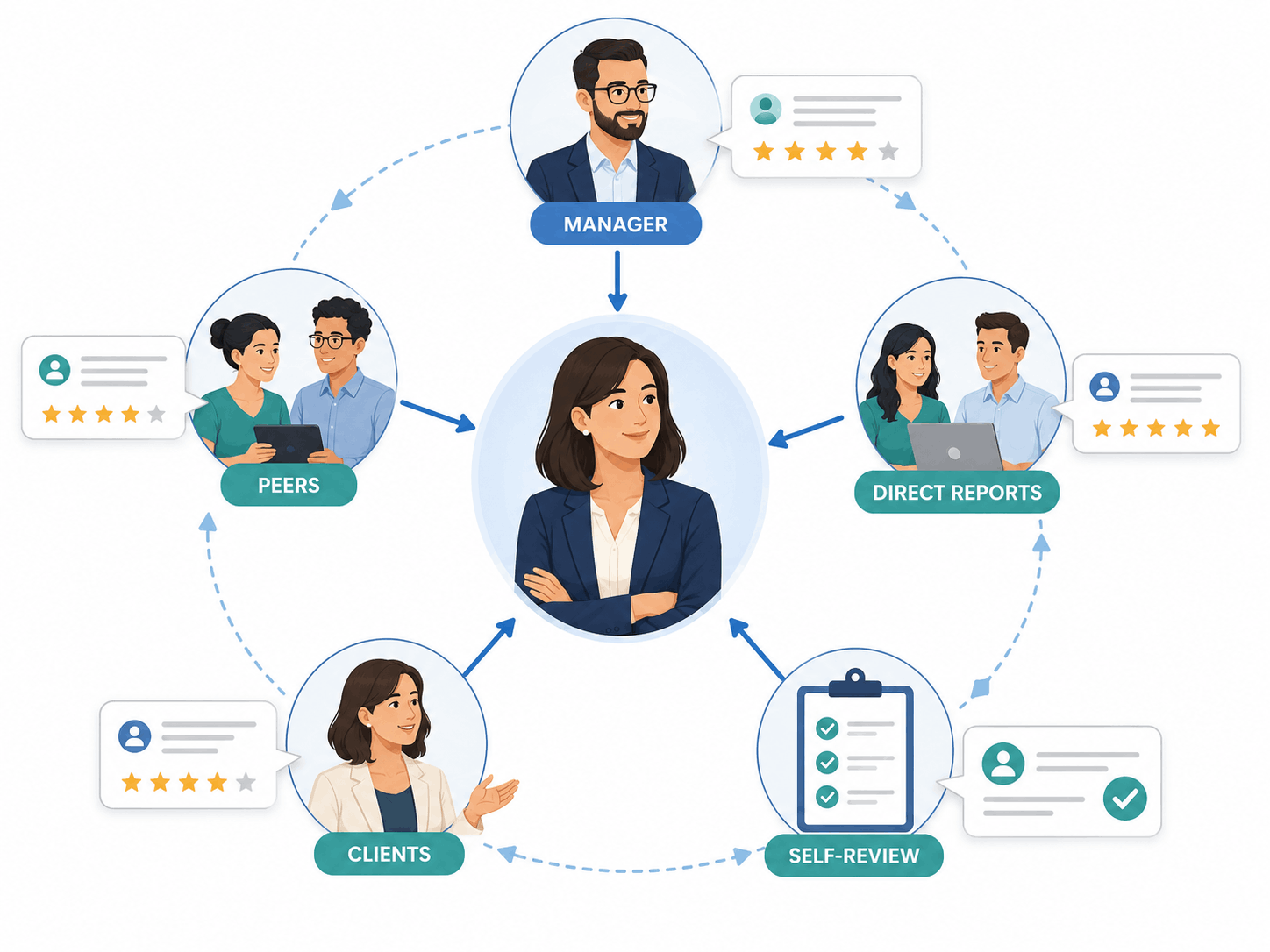
360 degree feedback for managers is a structured way to gather views from different people who work with a manager, such as direct reports, colleagues, senior leaders and sometimes clients or stakeholders. This wider perspective helps managers understand how their leadership style is experienced by others. It can highlight strengths, reveal blind spots and support more focused personal development.
Traditional feedback often comes from one person, usually a line manager or senior leader. While this can be useful, it may not show the full picture. A manager may communicate well upwards but struggle to support their team. They may be strong on technical delivery but less effective at coaching, delegation or conflict management. Multi-source feedback helps create a more complete view.
One of the main benefits of 360 degree feedback is self-awareness. Managers may not always realise how their actions, tone or decisions affect others. Feedback from several sources can show whether they are approachable, clear, fair, supportive and consistent. This helps managers reflect on the difference between their intentions and the impact they have on the people around them.
The process can also support leadership development. Feedback can be linked to key management skills such as communication, decision-making, emotional intelligence, delegation, problem-solving, accountability and team support. Instead of giving vague comments, a well-designed feedback process provides practical information that can be turned into development goals.
Confidentiality is important. People are more likely to give honest feedback when they feel safe and protected. If employees worry that their comments will be traced back to them, they may avoid giving useful information. A good 360 process should make it clear how feedback will be collected, reported and used.
The questions used in the feedback process should be carefully designed. They should focus on behaviours rather than personal opinions. For example, questions may ask whether the manager gives clear instructions, listens to concerns, provides useful feedback, supports development or handles pressure well. Behaviour-based questions make the results easier to understand and act on.
Feedback should also be balanced. The aim is not to criticise managers, but to help them improve. Reports should highlight strengths as well as development areas. Knowing what they already do well can give managers confidence and show them which positive behaviours to continue. Development points can then be approached constructively rather than defensively.
Timing also matters. 360 feedback can be useful during leadership development programmes, annual reviews, promotion planning or organisational change. It can also help newly appointed managers understand how they are settling into their role. However, it should not be used only when there is a problem. Regular feedback supports continuous improvement.
Managers need support to interpret the results. A feedback report can be difficult to process, especially if some comments are unexpected. Coaching, HR support or a guided review can help managers understand the themes, avoid focusing too heavily on one comment and identify practical next steps. The value of the process comes from what happens after the feedback is received.
Action planning is essential. Once feedback has been reviewed, managers should identify a small number of priorities. Trying to improve everything at once can be overwhelming. A practical development plan may include communication changes, leadership training, mentoring, coaching, better one-to-one meetings or improved delegation habits.
Organisations also benefit when managers act on feedback. Teams may feel more listened to, communication may improve and trust can increase. When employees see that feedback leads to positive change, they are more likely to engage with future feedback processes. This can help create a more open and constructive workplace culture.
There are also risks if the process is handled poorly. If feedback is vague, overly negative or used as a punishment, it can damage trust. If managers receive feedback but no support, the process may feel unfair or unhelpful. For this reason, organisations should approach 360 feedback carefully and make sure it is used for development rather than blame.
It is also important to explain the purpose clearly. Participants should understand that the goal is to support better management and leadership. Managers should know how the results will be used and whether they will form part of formal performance reviews. Clear communication helps reduce anxiety and encourages more honest participation.
In summary, 360 degree feedback for managers can be a powerful tool for improving leadership, communication and team performance. By gathering feedback from multiple sources, managers gain a fuller understanding of their strengths and development areas. When the process is confidential, constructive and supported by action planning, it can help managers become more self-aware, effective and trusted leaders.